
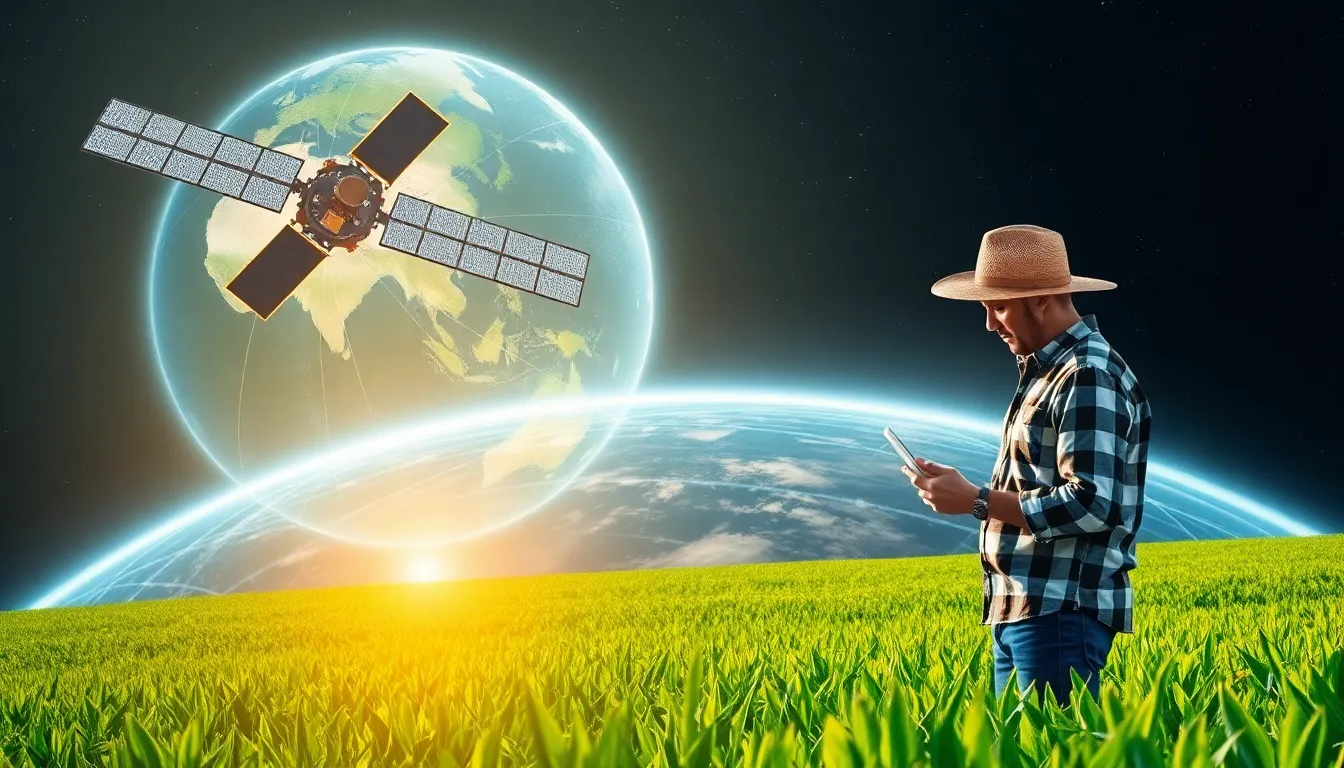
In a world where everything seems to be connected, satellite IoT is the superhero no one knew they needed. Imagine a network of devices communicating from the farthest corners of the Earth, all thanks to satellites floating high above. It’s like a global game of telephone, but instead of whispers, you get real-time data that can revolutionize industries.
From agriculture to logistics, satellite IoT is transforming how businesses operate, making them smarter and more efficient. It’s the secret sauce that turns mundane operations into futuristic marvels. So buckle up and get ready to explore how this out-of-this-world technology is bridging gaps and connecting dots like never before. Who knew that satellites could do more than just take pretty pictures of Earth?
What Is Satellite IoT?
Satellite IoT refers to the integration of satellite technology with the Internet of Things (IoT). This system enables devices to communicate through satellites, extending connectivity beyond traditional terrestrial networks. Various industries benefit significantly from this technology, including agriculture, logistics, and disaster management.
Satellite IoT solutions enhance monitoring capabilities for remote assets. Sensors deployed in fields collect data on soil health, crop conditions, and weather patterns. This data transmits to centralized systems via satellites, allowing farmers to make informed decisions that boost yields.
Logistics companies leverage satellite IoT for real-time asset tracking. It ensures that shipments are monitored consistently, reducing losses and improving efficiency. Through satellite communication, logistics managers receive updates regardless of location, enhancing operational transparency.
Disaster management also sees improvement through satellite IoT applications. Emergency response teams utilize this technology to assess damage and locate victims in remote areas. Reliable communication during crises allows for faster and more effective responses.
With the growing number of satellites in orbit—nearly 4,500 active satellites as of 2023—the reach of satellite IoT will expand rapidly. This expansion promises to fill connectivity gaps in underserved regions, fostering economic development. Industries that rely on data-driven decisions will find satellite IoT invaluable for augmenting their capabilities and driving growth.
Satellite IoT contributes to a more connected world, bridging technological divides. Enhanced connectivity supports smart city initiatives, environmental monitoring, and infrastructure management. Creating robust networks that support vast numbers of devices reflects the future of global communication.
Benefits of Satellite IoT

Satellite IoT offers numerous advantages, significantly improving global operations across various sectors.
Global Coverage
Global coverage remains one of the standout benefits. Satellite IoT encompasses remote areas where traditional cellular networks fall short, connecting devices in regions previously considered offline. It enables consistent communication in vast landscapes like deserts and oceans. This capability enhances agricultural efficiency, allowing farmers in isolated locations to monitor soil data and crop health effectively. Additionally, industries such as logistics rely on satellite IoT for tracking shipments across diverse terrains, ensuring real-time updates in places without existing infrastructure. With ongoing advancements, the reach of satellite IoT continues to grow, shaping a more connected world.
Enhanced Connectivity
Enhanced connectivity transforms operational efficiencies across industries. Satellite IoT facilitates data transmission from devices to centralized platforms, permitting timely insights and decision-making. Robust signal strength even in challenging environments ensures data is transmitted without disruption. This reliability supports emergency services during crises, where traditional communication methods may fail. In logistics, companies utilize satellite IoT to improve their supply chains, reducing delays and losses by accessing real-time tracking information. Overall, enhanced connectivity directly correlates to operational improvements, driving growth and innovation.
Applications of Satellite IoT
Satellite IoT plays a crucial role across various sectors, enabling advanced monitoring and communication capabilities. Several key applications showcase its versatility and impact.
Agriculture
In agriculture, satellite IoT boosts productivity by providing farmers with real-time data. Sensors installed on equipment monitor soil moisture, crop health, and weather patterns. Data transmission occurs instantly, empowering farmers to make informed decisions. Drones equipped with satellite IoT can assess crop conditions and identify areas needing attention. Through accurate insights, yields increase while resource management improves. Enhanced connectivity also benefits remote farms, ensuring consistent communication. Satellite IoT represents a significant advancement in precision agriculture.
Disaster Management
During crises, satellite IoT proves invaluable for disaster management. Emergency responders rely on real-time information to assess damage and coordinate rescue operations. Satellite connections provide reliable communication even in remote or affected areas, overcoming terrestrial network failures. Monitoring teams can track resource distribution and ensure aid reaches affected communities promptly. Technologies enable the sharing of critical data, improving response times and saving lives. Consistent updates allow situational awareness, enhancing decision-making processes.
Transportation
Transportation benefits significantly from satellite IoT by enabling efficient logistics and tracking. Fleet operators monitor vehicle locations and conditions in real time. Access to accurate data reduces delays and improves route planning. Satellite connectivity allows for tracking shipments no matter the location, enhancing transparency for businesses and customers. This technology minimizes losses while optimizing supply chains. Smart logistics benefit from predictive analytics, which helps in forecasting demand and managing inventory effectively.
Challenges Facing Satellite IoT
Satellite IoT faces significant challenges despite its transformative potential. Key factors include cost considerations and technical limitations that can hinder widespread adoption.
Cost Considerations
Initial setup costs for satellite IoT solutions present a barrier for many organizations. Launching satellites incurs high expenses, compounded by manufacturing and maintenance costs. Service pricing can also be prohibitive, especially for startups or small businesses. Subscription fees associated with data transmission add to ongoing operational costs, influencing budgeting decisions. Economies of scale may improve affordability as demand increases and technology advances.
Technical Limitations
Technical limitations impact the efficiency of satellite IoT operations. Bandwidth constraints can restrict data transmission capabilities, affecting the volume of information sent from devices. Signal latency may also pose challenges, especially for applications requiring real-time updates. Devices in remote areas often face limited connectivity, complicating data retrieval and analysis. Interference from atmospheric conditions can disrupt signals, impairing effective communication. Continuous advancements in satellite technology aim to address these issues, enhancing the overall viability of satellite IoT.
Satellite IoT is revolutionizing global connectivity by bridging gaps left by traditional networks. Its ability to provide real-time data and monitoring in remote areas empowers industries to make informed decisions and optimize operations. As technology advances and challenges are addressed, the potential for satellite IoT to enhance agricultural productivity, streamline logistics, and improve disaster response becomes increasingly clear. This innovation not only fosters economic growth but also supports sustainable practices and smart city initiatives. The future of satellite IoT promises even greater connectivity and efficiency across diverse sectors, shaping a more interconnected world.


